
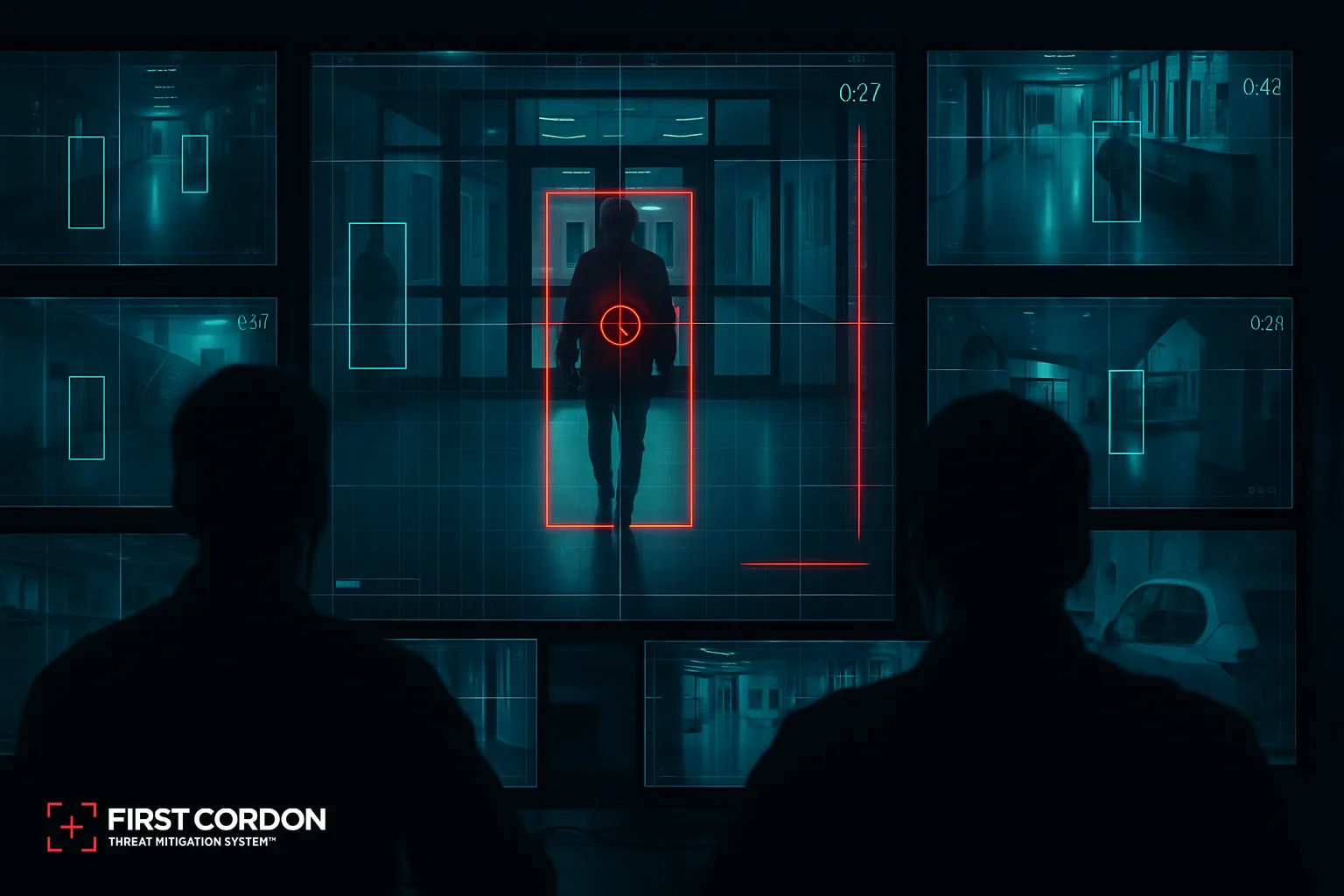
The Evolving Threat Landscape
Active shooter incidents continue to represent a critical vulnerability across public and private spaces. Law enforcement agencies report increasing response times in complex environments where early detection systems remain absent. Schools, airports, transit hubs, and commercial facilities face mounting pressure to implement layered security protocols that bridge the gap between human observation and technological intervention.
Detection Gaps in Current Security Models
Traditional security approaches—CCTV monitoring, physical access controls, and manual threat assessment—operate under significant constraints. Human operators monitoring surveillance feeds experience attention fatigue, particularly in multi-camera environments. Studies indicate security personnel miss critical pre-incident indicators within the first 60-90 seconds of escalation, a window where immediate response capability directly impacts casualty outcomes.
The Case for Integrated Defense
Organizations deploying AI-assisted threat detection systems report measurable improvements in incident response protocols. These systems excel at pattern recognition across visual data streams, identifying weapon characteristics that human operators might initially overlook amid environmental complexity. The critical distinction lies in the verification layer: AI detects anomalies; trained security personnel make the consequential decisions.
Operational Requirements in High-Risk Environments
Facilities managing high-volume foot traffic—100,000+ daily visitors—cannot rely on manual screening alone. Entry points, parking structures, and common areas require continuous monitoring without sacrificing operational flow. Stakeholders increasingly recognize that passive security creates false confidence, while proactive detection paired with human judgment establishes genuine preparedness.