
Starting with What You Already Have
One of the most persistent misconceptions about weapon detection deployments is that they require a substantial hardware investment — new cameras, new cabling, new infrastructure that needs to be procured, installed, and maintained.
In the majority of First Cordon deployments, this is simply not the case.
Most commercial buildings, schools, hotels, and venues already have an IP camera network in place. These systems were installed for general surveillance and recording purposes, and they sit largely passive — capturing footage that is reviewed only after an incident has occurred, if at all. The TMS™ deployment process begins by assessing what you already have, not by designing around what you do not.
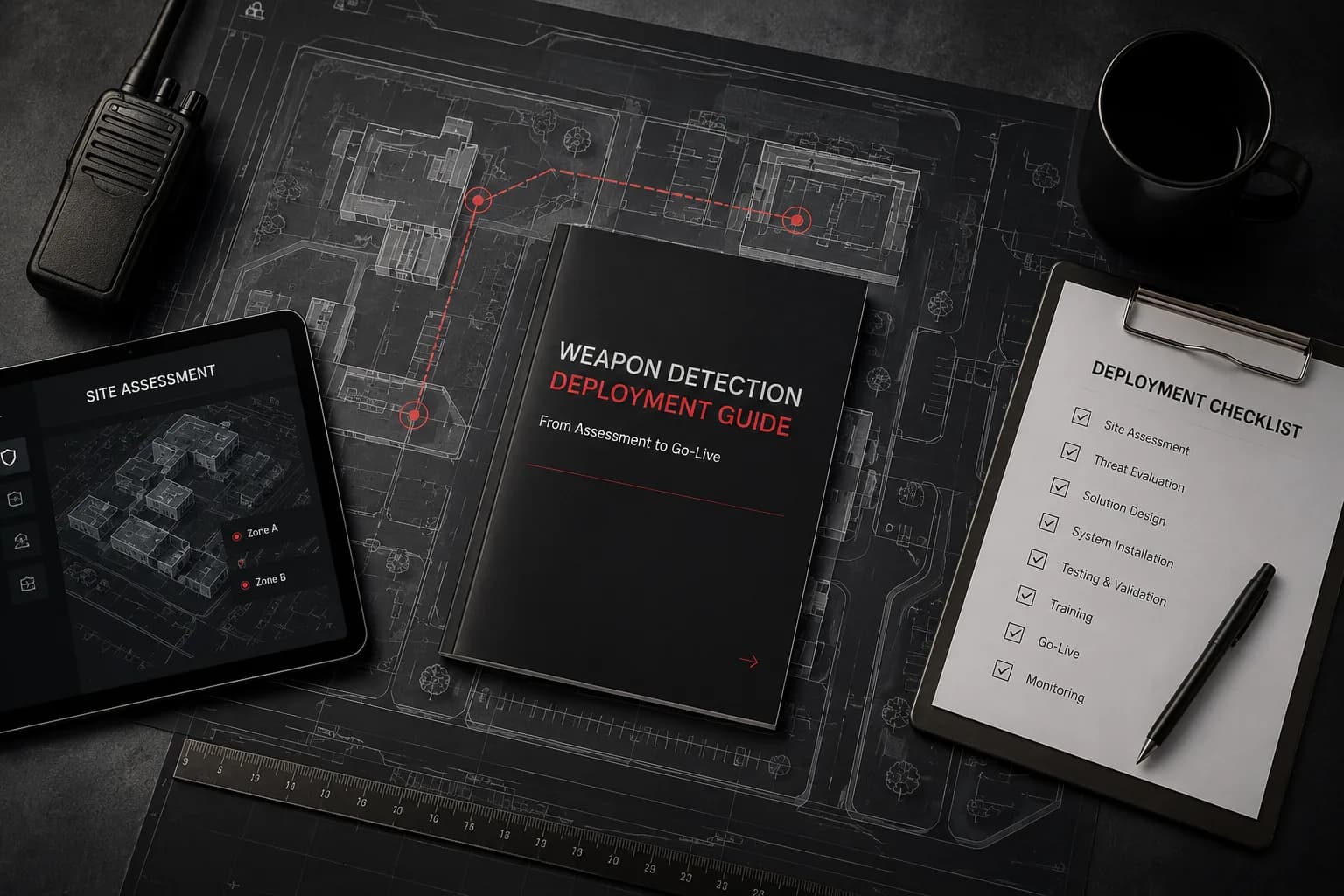
The site assessment phase is where this conversation starts. Our team reviews your existing camera infrastructure: the make and model of your cameras, the network they sit on, the coverage zones they provide, and any gaps in sight lines that may exist. In most cases, we find that the existing coverage is sufficient to begin monitoring the highest-priority zones immediately, with recommendations for additional coverage where genuine gaps exist.
This approach has a practical consequence that matters to most organisations: the deployment timeline is significantly shorter, and the upfront cost is significantly lower, than organisations typically expect when they first enquire about weapon detection.
Understanding the Site Assessment
The site assessment is not a sales call. It is a professional review of your physical environment conducted by people who understand both the technical requirements of TMS™ and the operational realities of the environments we work in.
During the assessment, our team maps your site layout against your camera coverage. We identify the primary access routes, the high-traffic public zones, the areas where a threat is most likely to first appear, and the areas where early detection would provide the most response time. We look at camera angles, field of view, and lighting conditions — all of which affect detection quality.
We also have a practical conversation about your security team's current protocols. Who is responsible for security response at your site? What does your current escalation chain look like? What communication channels does your team use? This information shapes how we configure the alert delivery system so that verified detections reach the right people through the right channel at the right moment.
The assessment typically takes one day for a single-site location and two to three days for a larger or more complex environment. It concludes with a clear written summary of our findings, our deployment recommendations, and a go-live timeline.
Integration and Configuration
Once the assessment is complete and a deployment decision is made, the integration phase begins. This is where TMS™ connects to your existing camera network.
The technical integration process is handled entirely by First Cordon's team. Your IT or facilities management team does not need to be heavily involved, though we coordinate with them to ensure the integration fits within your network architecture and security policies.
The configuration phase that follows is where the system is calibrated for your specific environment. This involves setting detection parameters appropriate for your site — accounting for the specific camera models in use, the typical lighting conditions at different times of day, the expected volume and type of foot traffic, and the site-specific context that affects what constitutes a credible detection.
This calibration step is one of the reasons human verification matters even during the configuration phase. Early in a deployment, before the system has been fine-tuned for a specific environment, the human review layer acts as a quality check — ensuring that any edge cases or environmental quirks are identified and accounted for before the system is operating at full confidence.
The Operator Briefing Process
Before your site goes live, First Cordon's monitoring team goes through a detailed briefing process. This is a step that fully automated systems cannot replicate, and it is one that we consider essential to the quality of our service.
The briefing covers your site layout in detail: the floor plan, the camera positions, the key locations within your environment, the names and roles of your nominated security contacts, and any site-specific context that a monitoring operator needs to do their job well.
If your site has particular characteristics that affect interpretation — a loading dock where large items are regularly moved, a staff car park where equipment is frequently transported, a reception area that regularly hosts visitors carrying unusual items — our operators know about it before they begin monitoring your site. That context allows them to make faster and more accurate verification decisions when a detection event occurs.
The briefing is not a one-time event. As your site changes — new staff, new layouts, new operational patterns — the briefing information is updated. This is part of the locally-based account management that First Cordon provides to every client.
Go-Live and the First Weeks
From the moment your site goes live, monitoring is continuous. There is no warming-up period, no reduced coverage during nights or weekends, no gap during public holidays. The system operates at full capacity from day one.
The first few weeks of a deployment are the period during which the configuration is most likely to be refined. Our team monitors detection patterns during this period and works with you to adjust any parameters that need tuning for your specific environment. This is a normal part of any deployment, and it is managed transparently — you will know when adjustments are being made and why.
During this period, your security team is also building familiarity with the alert format, the response protocol, and the cadence of verified alerts at your site. Most sites receive relatively few verified alerts — this is by design. The system is optimised for precision, not volume.
Scaling Across Multiple Sites
For organisations that operate across multiple locations — a school with multiple campuses, a hotel group with several properties, a government department with offices across a region — TMS™ is designed to scale without proportional complexity.
Each site operates as an independent monitoring zone, with its own camera feed and its own alert delivery configuration. But they are managed through a unified account structure, with a single point of contact at First Cordon for all sites. If you add a new location, the assessment and integration process follows the same pattern. If you modify an existing site, the configuration is updated centrally.
This means that the operational overhead of managing weapon detection across a multi-site estate does not grow linearly with the number of sites. Once the deployment model is established and your team understands the alert protocol, each additional site adds coverage without adding complexity.
After Deployment: Ongoing Support
First Cordon's relationship with clients does not end at go-live. Locally-based account management and technical support is part of every deployment, and it is a meaningful differentiator in a market where global providers typically offer remote support from offshore centres.
Your account contact at First Cordon is based in your region. They understand your operational context, your regulatory environment, and the specific characteristics of your site. When you need to update your alert contacts, adjust your escalation protocol, or add coverage to a new area, you are speaking with someone who knows your account — not working through a ticketing system with a global helpdesk.
This local presence also matters in the event of an incident. If a verified threat alert has been issued and your team has responded, First Cordon is available to support the post-incident review — reviewing the detection timeline, the operator verification process, and the alert delivery record to provide a clear account of the system's role in the response.